Evaluating 3D Pastel Seamless Easter Eggs for Creative Projects
In the landscape of digital design assets, seasonal themes often dictate the availability and variety of resources. Among these, 3D Pastel Seamless Easter Eggs represent a specific niche that blends three-dimensional rendering techniques with soft, spring-inspired color palettes. For designers, crafters, and content creators, understanding the utility, aesthetic impact, and practical applications of this asset class is essential before integrating it into professional or personal workflows.
This analysis explores what constitutes 3D pastel seamless patterns, how they differ from flat or illustrative alternatives, and where they fit within broader design categories. The goal is to provide a clear framework for evaluating whether this style aligns with your current project requirements, budget, and creative goals.
Defining the Asset: What Makes It Distinct?
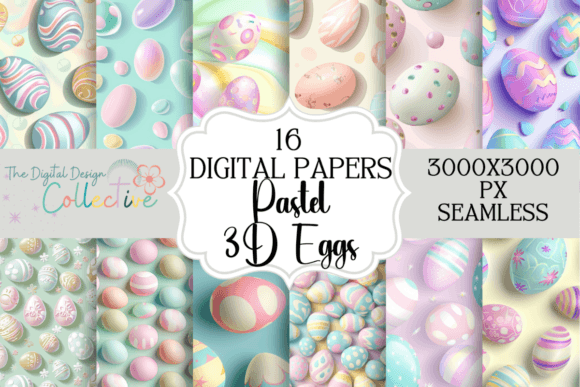
The term "3D Pastel Seamless Easter Eggs" describes a collection of digital textures featuring spherical egg shapes rendered with depth, lighting, and shadow effects. Unlike traditional vector illustrations or 2D clipart, these assets utilize gradients, highlights, and perspective to create a tactile appearance. The "pastel" qualifier refers to a low-saturation color scheme—soft pinks, mint greens, lavenders, and baby blues—that evokes feelings of calmness, springtime, and renewal.
The "seamless" aspect is a technical feature critical for scalability. A seamless pattern tiles infinitely without visible borders or interruptions, allowing the texture to cover large areas such as website backgrounds, wrapping paper designs, or fabric prints without awkward gaps. This distinguishes the asset from single-image graphics, which are better suited for focal points rather than background elements.
When comparing this to other Easter-themed assets, the distinction lies in the visual weight. Flat designs offer clarity and simplicity, making them ideal for minimalist interfaces. In contrast, 3D pastel eggs add volume and richness, providing a more immersive visual experience. However, this added complexity can also introduce challenges in readability and integration, depending on the context.
Comparing Approaches: 3D Textures vs. Alternatives
Selecting the right visual style requires weighing several factors, including audience expectations, medium constraints, and overall brand identity. Below is a comparison of 3D pastel seamless patterns against common alternatives.
3D Rendered Patterns vs. Flat Vector Graphics
Flat vectors are scalable, lightweight, and easy to edit. They are widely used in modern UI/UX design because they load quickly and maintain clarity at any resolution. However, they can sometimes feel sterile or overly corporate if not paired with strong typography or vibrant accent colors.
3D pastel patterns, on the other hand, bring organic warmth and sophistication. They are particularly effective in industries focused on lifestyle, wellness, parenting, and artisanal goods. The tradeoff is file size and processing power; high-resolution 3D textures require more bandwidth and may slow down web performance if not optimized. Additionally, editing 3D textures is less flexible than editing vector paths, as changes often require re-rendering or advanced image manipulation.
Seamless Tiles vs. Single Focal Images
Single images are powerful for headlines, social media posts, or email headers where attention needs to be directed to a specific point. They do not repeat, avoiding the risk of visual monotony over large spaces.
Seamless tiles excel in covering extensive surfaces. For example, when designing custom packaging or a full-page blog background, a seamless pattern ensures consistency. The decision here depends on scale: use single images for emphasis and seamless patterns for environment-building.
Practical Applications and Use Cases
The versatility of 3D pastel seamless Easter eggs allows them to be integrated into diverse projects. Understanding these applications helps determine their value proposition for different user types.
- Digital Scrapbooking and Layouts: For users creating memory-keeping albums, these patterns provide a cohesive backdrop that enhances photos without overpowering them. The soft tones complement family portraits and spring-themed events effectively.
- Web and Blog Design: Incorporating subtle 3D textures can break up white space and add personality to a site. When used sparingly—for instance, as a sidebar background or section divider—they can elevate the user experience without compromising load times.
- Print-on-Demand Products: Artists selling on platforms like Etsy or Redbubble often use seamless patterns for mugs, t-shirts, and tote bags. The 3D effect translates well to print, offering a premium look that stands out against competitors using basic flat designs.
- Event Stationery: Invitations, birth announcements, and thank-you cards benefit from the celebratory yet gentle nature of pastel eggs. The seamless nature allows for custom wrapping papers or tags that match the invitation suite perfectly.
- Business Branding: Small businesses in the baking, childcare, or floral sectors might use these patterns for social media banners or product packaging. It signals approachability and attention to detail.
Evaluating Strengths and Limitations
No design asset is universally superior. Evaluating 3D pastel seamless Easter eggs requires an honest assessment of their pros and cons relative to your specific needs.
Strengths
Aesthetic Appeal: The combination of depth and soft color creates a visually pleasing result that feels modern yet timeless. It avoids the cliché of bright, primary-colored Easter graphics, appealing to a more mature or sophisticated demographic.
Versatility: Because the pattern is neutral in theme (eggs) but distinct in style (3D pastel), it can bridge seasonal marketing with year-round branding if used subtly. It works well for spring campaigns but does not scream "holiday" as aggressively as some traditional motifs.
Efficiency: For designers, having a pre-made seamless tile saves time compared to creating a pattern from scratch. It allows for rapid prototyping and consistent application across multiple deliverables.
Limitations and Tradeoffs
Overpowering Potential: If the contrast between the eggs and the background is too high, the pattern can become distracting. Text placed directly over such a busy texture may suffer from reduced legibility, requiring careful layering and opacity adjustments.
Seasonality: While versatile, the motif is inherently tied to Easter or spring. Using it outside of this timeframe may confuse audiences unless the brand identity is strongly aligned with seasonal rotations.
Technical Requirements: High-quality 3D assets often come in large file sizes. Users working with limited storage or slow internet connections may find downloading and managing these files cumbersome. Furthermore, printing high-resolution 3D textures requires professional-grade equipment to avoid pixelation or color banding.
Decision Factors: Is This Right for You?
Choosing to incorporate 3D pastel seamless Easter eggs into your workflow should depend on three key questions:
- What is the primary medium? If you are designing for digital screens where resolution is high and interactivity is key, these assets shine. For small-scale print items like business cards, a simpler flat design might be more cost-effective and easier to produce.
- Who is the target audience? If your audience values modern aesthetics, softness, and emotional connection, the pastel 3D style is likely a strong fit. For audiences preferring bold, direct messaging, a more graphic-heavy approach may be preferable.
- What is the scope of the project? For large-scale applications like website backgrounds or fabric rolls, the seamless capability is a major advantage. For one-off designs like a single flyer, a single high-resolution image might be sufficient and easier to manage.
Maximizing Value in Your Purchase
When acquiring a bundle of 16 seamless patterns, strategic planning ensures maximum return on investment. Instead of using all patterns simultaneously, consider assigning each pattern to a different product line or campaign phase. This prevents visual fatigue and allows you to test which variations resonate best with your audience.
Additionally, explore cross-category applications. A pattern designed for scrapbooking might also serve as a unique texture for jewelry design mockups or decoupage furniture projects. By viewing the asset as a modular component rather than a static image, you can expand its utility beyond immediate seasonal needs.
Finally, always review the license terms associated with the download. Some bundles allow for commercial use in physical products, while others restrict usage to digital-only formats. Understanding these boundaries protects your business and ensures ethical use of intellectual property.
Conclusion
3D pastel seamless Easter eggs offer a specialized tool for designers seeking to add depth and seasonal charm to their work. They occupy a middle ground between playful clipart and serious 3D rendering, offering accessibility without sacrificing quality. By carefully considering the medium, audience, and scope of your project, you can determine whether this asset class enhances your creative output or if a simpler alternative would serve your purposes better. Ultimately, the value lies not just in the visual appeal, but in the thoughtful integration of these patterns into a cohesive design strategy.